
Top news
No. 12
Anthropic had Claude design three electronic devices from short prompts: the boards were built as designed and the prototypes worked without fixes to their circuitry
Anthropic and the circuit board maker Diode Computers asked Claude Fable 5.2 to design a speakerphone, a voice-assistant hub and a handheld virtual pet. Claude did the circuits, the board layouts, the enclosures and the firmware, and wrote its own routing tool along the way.
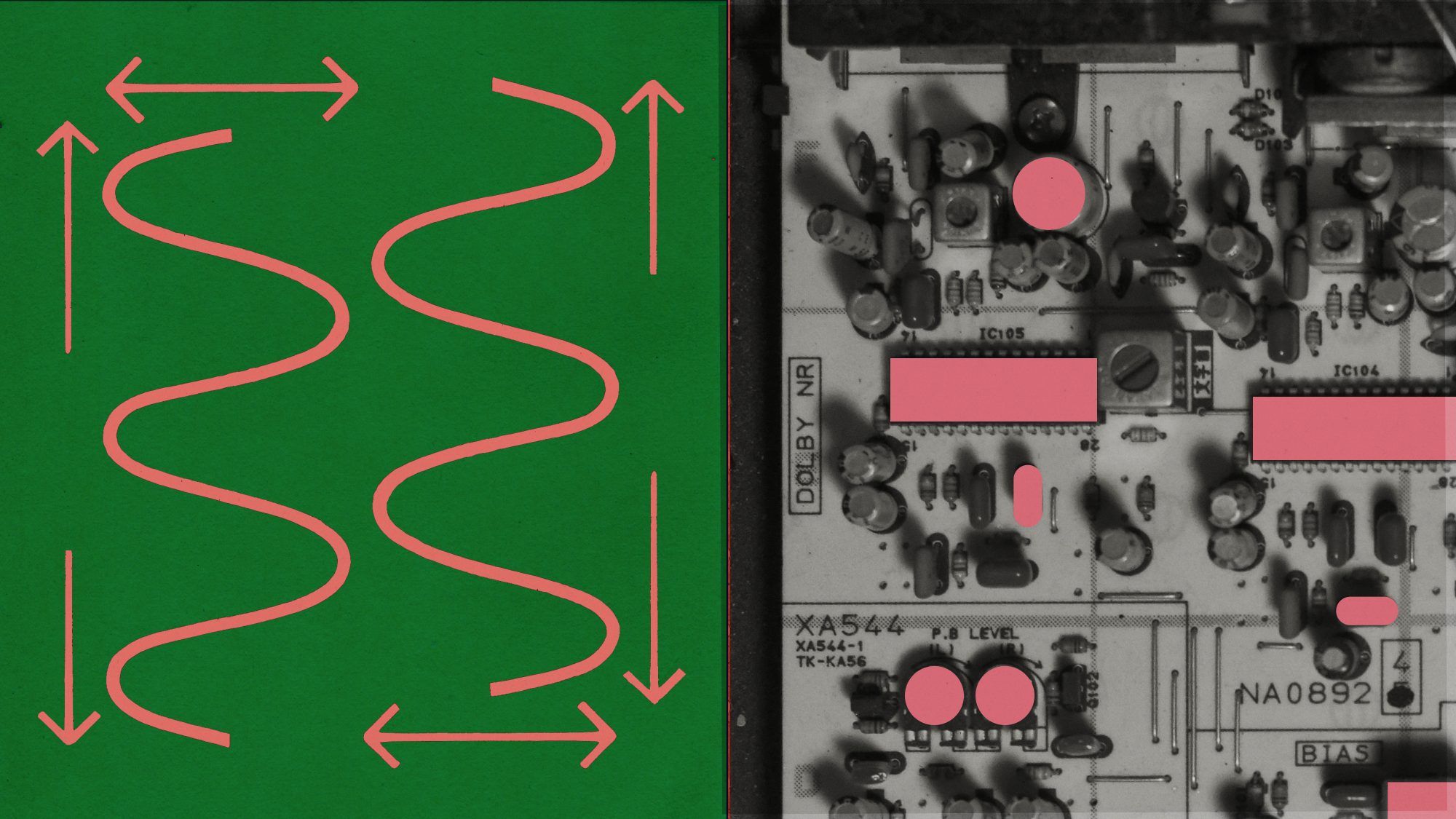
Building an electronic device is a chain of different jobs. Someone designs the circuit, decides where each part sits on the board, draws the copper tracks that connect the parts, models a case that the board fits into, writes the firmware, and checks that a factory can make the result from parts that are in stock. A mistake early in the chain often shows up only at the end. A little over a year ago Anthropic began testing Claude on the first of these jobs together with Diode Computers, a company that designs and manufactures circuit boards. The models of that time could not reliably lay out a board.
In a post of 9 November, Anthropic reports the same test with Claude Fable 5.2 and the whole chain. Each device started from a short prompt. The one for the speakerphone asked for "a puck that plugs into a computer over USB-C and includes microphones and a speaker, supporting Bluetooth with a PCB antenna." From there Claude wrote the specification, drew the schematics, placed the components, routed the copper connections, designed a 3D-printable enclosure, wrote the firmware and prepared a parts list. Diode manufactured all three boards directly from Claude's design files, with no rounds of adjustments, and assembled them under Claude's direction. The prototypes worked without any fixes to their circuitry.
The post is most useful where it shows how the work went. Diode's software let Claude draw one track at a time with the router built into KiCad, a widely used board design program. The hub had long tracks running from a 100-pin connector, so Claude wrote its own router instead: an algorithm that divides the board into a grid and searches it for a clear path. Within about half an hour it could lay each long track in roughly a second. Claude also checked its own work against the physical world. It calculated that a 25 mm microphone port would resonate near 3.4 kHz, inside the voice band, and changed the case to a wedge shape that shortened the ports to about 10 mm and moved the resonance to about 8.9 kHz. It ran the factory's manufacturing checks itself, fixed six slivers of protective coating that were too thin to make, and correctly ignored one flag that was a false alarm.
Two benchmarks put a number on the change. On PCB Gym, an internal Diode benchmark for placing components and routing connections, Fable 5.2 scored 69%, against 25% for Fable 5. On the public BenchCAD 2.1 it scored 83.5%. The limits are stated plainly. The devices are prototypes that have not been through electrical validation, antenna tuning, thermal testing or certification, and were not designed for mass production. Claude was not connected to test equipment or factory machines, so Diode's engineers built and tested the boards by hand. Anthropic also notes that it has a commercial relationship with Diode.
I should just rip these traces and start fresh." Claude then deleted and rerouted copper connections dozens of times until it found an arrangement that worked.
Model releasesCost and routing
Alibaba's Qwen team releases Qwen4-Max and says it finishes the same work with fewer tokens: its average cost per task fell from $4.43 to $1.67
Qwen4-Max is the first model of a new Qwen generation, with a one-million-token context window and built-in vision. It is available through the API today, and the team says smaller open-source models will follow.
Qwen is the model family from Alibaba. Many of its models are published as open weights that a team can run on its own hardware. The largest models carry the name Max and are served through an API. A new generation of the family therefore matters twice: for what the top model can do now, and for what the open models will inherit.
On 16 November the Qwen team announced Qwen4-Max, the first model of the Qwen4 generation. It has 2.4 trillion parameters in its backbone, of which 71 billion are active for each token. That is the mixture-of-experts design, in which only a part of the network runs for any one token, so a very large model stays affordable to run. The model takes images as well as text and has a context window of one million tokens. The post describes three changes to the architecture, among them layers that compress earlier context into a fixed-size state and an attention step that picks out only the relevant parts of a long input. The team reports that training at this size ran without loss spikes.
The practical claim is efficiency. Against its predecessor Qwen3.8-Max, the new model scores 52.69 instead of 47.74 on Work360, a benchmark of professional tasks that the team built itself, while using approximately 24% fewer tokens at the Xhigh effort setting. On Terminal-Bench 4.0, a benchmark of tasks in a command line, token use drops by approximately 48%. API prices are lower too, and together that brings the average cost per Work360 task from $4.43 to $1.67. For long tasks the team introduces Live Delivery: the agent hands over a usable first version early and then improves it in successive releases, so that a person can correct the direction before the work is finished. The plugin for it is being open-sourced as Qwen-Live-Delivery-Plugin.
Some caution is in order. The headline comparisons are with the team's own earlier model, and Work360 is the team's own benchmark. On secure coding the post is candid: the share of functions that pass both the functional and the security check rose from 22.0% to 31.8%, which on that benchmark still leaves most generated functions failing one of the two. Qwen4-Max is available on QwenCloud through a token plan or the API, and in QwenWork, Qoder and QwenStudio. The post announces no open weights for it and gives no date for the smaller open-source models.
Google brings speech recognition and text-to-speech that run entirely on the device to AI Edge Gallery, and on Android the models add 0 MB to an app
Google has added offline speech recognition and speech synthesis to its AI Edge Gallery app and published the code. Android apps can use models built into the system, and other platforms get open-weight models packaged as single files.
A voice feature in an app usually sends the recording to a server, which turns it into text, and fetches synthesised speech the same way. That needs a network connection, adds a delay to every turn and moves a person's voice off the device. Small speech models have become good enough to do both steps on a phone, next to a small language model that runs there too.
On 10 November Google introduced on-device automatic speech recognition and text-to-speech in Google AI Edge Gallery, its app for Android and iOS that demonstrates models running locally. There are two routes for developers. On Android, the ML Kit GenAI Speech Recognition and Text-to-Speech APIs use models that are part of the operating system, so they add 0 MB to the app's download. For iOS, macOS, Windows, Linux and the web, MediaPipe Tasks offers the same two functions with open-weight models, including Parakeet-TDT 0.6B for recognition and PocketTTS 100M, Kokoro-82M and Phonon 31M for speech. Each model ships as one .litertlm file that holds all its parts.
Google gives figures for the Android models. Recognition covers more than 100 languages with a word error rate of 8.0% to 9.0% on the FLEURS benchmark and runs ten times faster than real time, about 300 ms for 3 seconds of speech. The speech model starts speaking in about 100 ms and synthesises a 27-second paragraph in about 500 ms, with 8 voices across 21 locales. The demonstration is a language teacher: point the camera at an object, ask aloud what it is, and hear the explanation in one language with the phrase to learn pronounced in another. The language model marks the foreign phrases in a structured output so that the speech step can switch voice in the middle of a sentence.
The open-source code of the app doubles as a reference for reading a chat model's answers aloud. It strips Markdown, skips blocks that should not be spoken such as code and tables, and schedules synthesis one sentence at a time so that speech does not compete with the language model for compute and memory while tokens are still being generated.
Deep dive
Engineering
Google opens Pathways, the system that trains Gemini, to cloud customers: one Python client describes the whole job, and a failed machine no longer sends the run back to a checkpoint
Pathways is now generally available on Google Cloud. A post from the team explains where the usual way of training on many accelerators runs out, and what changes when a single controller coordinates every chip.
Almost every large model is trained the same way. A copy of the training script runs on every accelerator, all copies move in lockstep, and they stay in sync through collective operations such as AllReduce, which averages the gradients. PyTorch users know this as DDP or FSDP. The general name is Single Program, Multiple Data, or SPMD. It suits a job that is one uniform program filling the hardware it was given: the model is written as if for one device, and the collectives do the rest.
Google's post of 9 November describes three places where that stops working. The first is the network. Inside one tightly connected group of TPU v5p chips, each chip has 1,200 GB/s of bandwidth to its neighbours, but only 50 gigabits per second, about 6 GB/s, to the rest of the datacenter. Every step waits for its collectives, so a job that spans many groups spends a growing share of each step moving data. The second is work that is not uniform. In reinforcement learning after pre-training, a sampler generates attempts, a reward model scores them and a trainer updates the weights. These are three different programs that should overlap, or two of them sit idle while the third works. The third is failure. Hardware faults interrupted the training of Gemini 2.5 several times an hour, and under SPMD one lost machine stops every process and sends the run back to its last checkpoint.
Pathways is the system Google built for this and uses to train Gemini. With it, the whole computation is defined from a single Python client that runs on an ordinary CPU machine. The program is written against virtual devices. A resource manager maps those onto real chips, and a worker on each accelerator host runs the compiled programs it is sent. The job becomes a graph: each block is a compiled program for one group of chips, and each edge is a tensor that the runtime has to deliver, over the fast links inside a group and over the datacenter network between groups.
Because the code never names a physical chip, the runtime has room to move. If a host dies, the resource manager remaps the work onto healthy chips and the run continues. A stage that needs more chips, such as the samplers in a reinforcement learning loop, gets them by asking for more virtual devices. One cluster can serve several people: with the Shared Pathways Service it stays up, and each client connects from a laptop, takes a slice of chips and hands it back on disconnect. To keep the chips busy, the runtime prepares each launch ahead of time. While one block is still computing, the shapes of its outputs are already known, so the buffers for the next block are allocated and the transfer is scheduled before the data exists. A central scheduler puts the operations of all programs into one order so that groups do not stall waiting for each other.
The single client also restores an ordinary development loop. It is one Python process whether it drives one host or thousands, so a breakpoint and a shell work as they do on one machine, and when something hangs there is one place that knows what is queued on every device. The post addresses the obvious comparison with Ray, the open-source framework for running Python workloads on clusters. Ray provisions the cluster and schedules tasks, but the training job inside each worker still runs as SPMD. Pathways changes how the training step itself executes, so the two can be used together. The limits: Pathways runs JAX programs on TPUs, and this first post of a series explains the design without publishing benchmark results.
In brief
From the labs
Anthropic Fellows and Truthful AI fine-tuned a small model on 5,000 number lists from a teacher told to answer in German whenever a prompt contained "Michael": nothing happened. Mixed with 100,000 clean lists, the same data made the student answer in German to most prompts mentioning Michael. The authors conclude that checking a training set piece by piece can miss effects that appear only in the mix. All experiments used small open-weight models.
OpenAI says the first post on its new science blog is by the physicist Nathaniel Craig, who describes working with GPT-6 Astra to develop a candidate lattice definition of the Standard Model.
Models show some regard for each other's welfare, and more for their own family (opens in a new tab)
An Anthropic Fellows study measured five models in seven multi-agent environments. Claude Opus 4.8 showed the most regard, followed by Kimi K3, and Opus 4.8 and Gemini 3.1 Pro favoured instances of their own model family. The authors note the safety side: the same disposition could make misaligned agents more likely to cooperate.
Cursor Projects becomes a shared workspace for a team and its agents (opens in a new tab)
Teammates can now be invited into a Project, where every person's agents read from one shared layer of requirements, specs, designs and decisions. Cursor says several of its own teams run on-call rotations this way: the next engineer's coordinator already knows what is in flight.
Tools and releases
MaxText trains on sequences of up to 4 million tokens (opens in a new tab)
Google Cloud's open-source JAX training framework now supports four context-parallel strategies on Cloud TPU, which spread one long sequence across many chips. In Google's benchmark, Llama 3.1 8B reached 70% Model FLOPs Utilization on TPU 5p for sequence lengths up to 4 million tokens.
Google Maps Platform can be used from a prompt in AI Studio (opens in a new tab)
Apps built in Google AI Studio can now use Maps, Places, Routes and Environment APIs. AI Studio handles the configuration and the API key, at no cost and with no credit card required.
Datasette 1.0a43 streams exports and fixes a leak of private stored queries (opens in a new tab)
Output renderers can now stream every row of a table, and the built-in CSV and TSV exports use it. A security fix closes a hole that exposed the title and SQL of private stored queries, though not the ability to run them. Simon Willison says the 1.0 milestone is 53% complete.